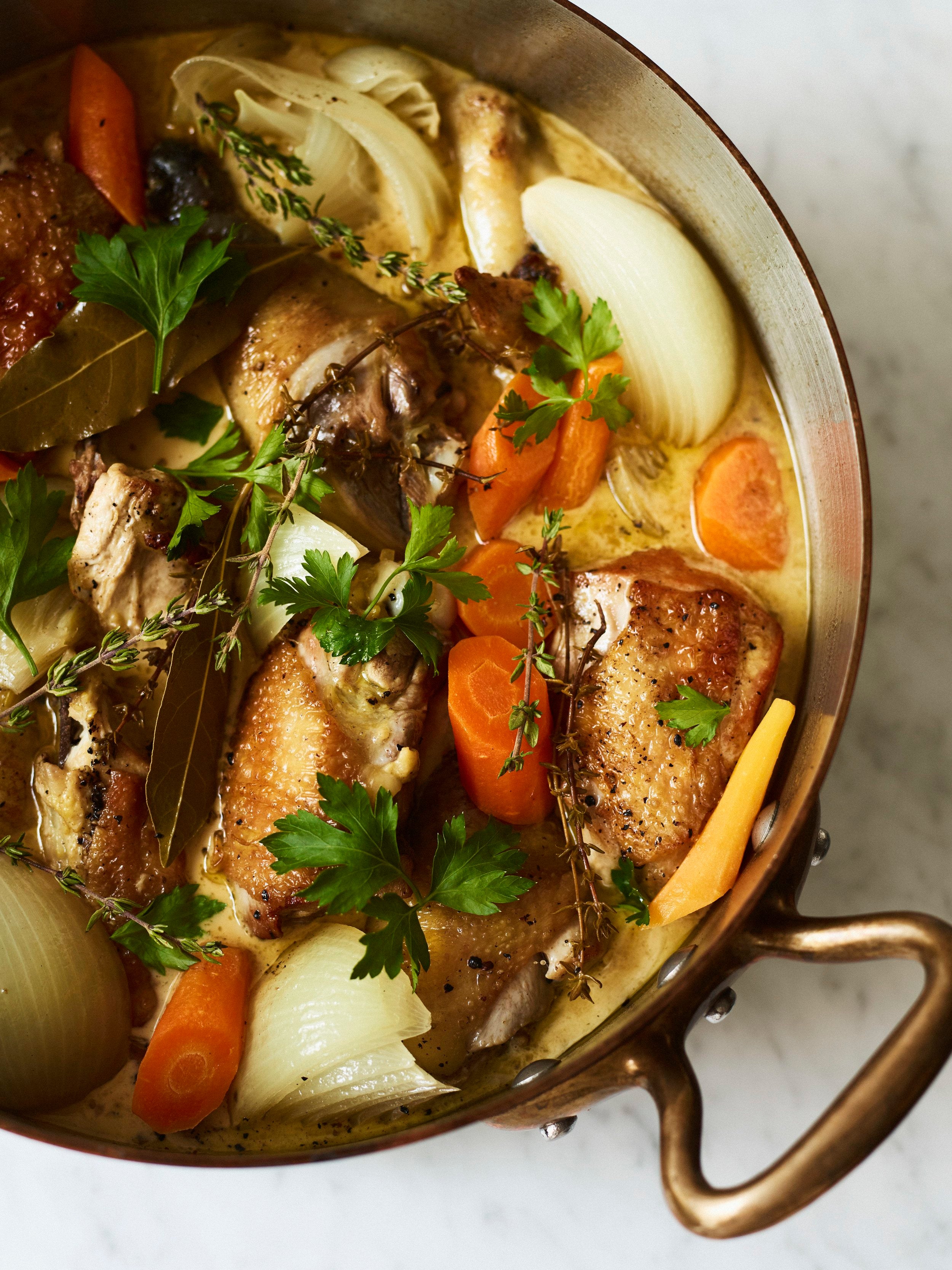




Chicken Braise with Tarragon
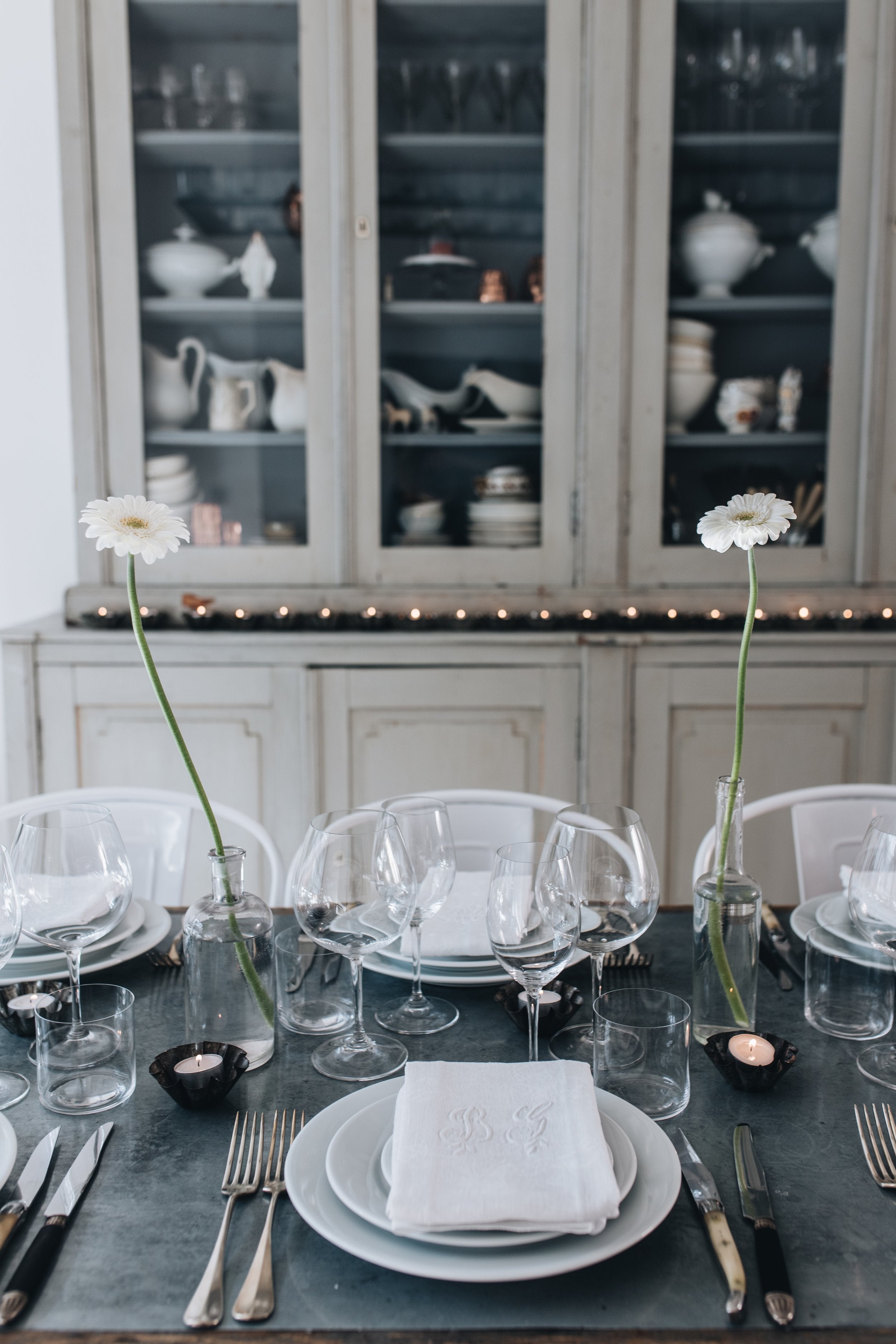
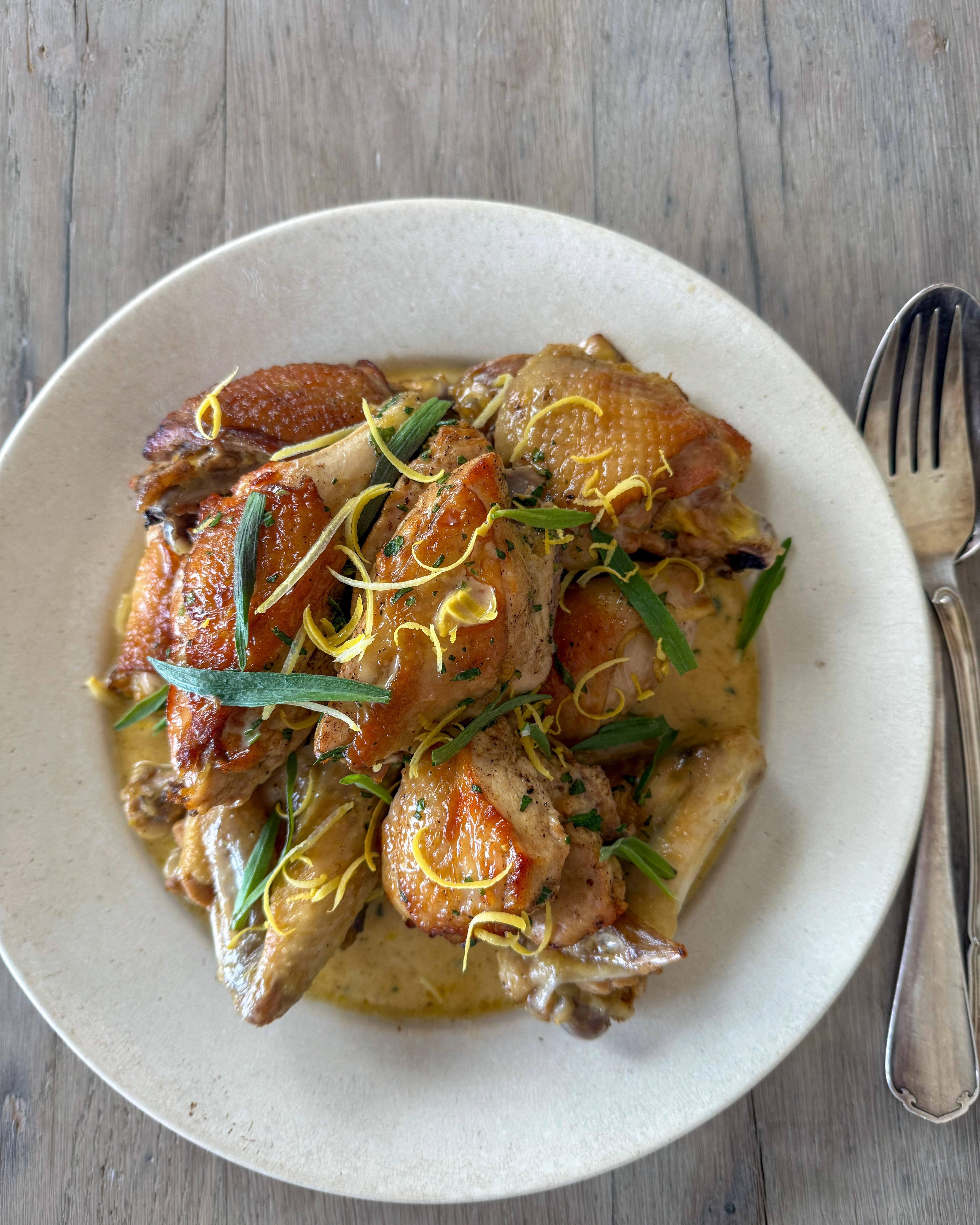
The traditionally French flavor of tarragon and the brightness of lemon zest and preserved lemon peel make this braised bone-in chicken a great dinner party centerpiece with rich, herbal flavors. But since it has fewer ingredients and cooks more quickly than classic poultry icons like coq au vin, it’s also convenient enough for a weeknight. We like to serve it over rice, which we start when the chicken goes into the oven. If you prefer, you can also spoon the chicken and its sauce over peeled, steamed small potatoes–or with anything that sops up the delicious braising liquid.
Camargue rice is grown in the southwest of France; it has a rich, nutty flavor and a chewy texture. We typically cook the white variety like pasta, in plenty of salted boiling water, until tender, but you can substitute basmati rice instead, if you prefer. To cook 1 1/2 cups basmati rice, first rinse it well, then combine it in a medium saucepan with 2 cups of water and a pinch of sea salt, and bring it to a boil over high heat. When the water boils, reduce the heat to its lowest setting, cover the pan, and cook for 15 minutes, undisturbed. Remove the pot from the heat, still covered, and let it steam for another 10 minutes, then fluff it with a fork and serve.
Ingredients
Serves 4 to 6
- 1 small (3- to 4-pound/1.4- to 1.8-kg) pasture-raised chicken
- Fleur de sel and freshly ground black pepper
- 1 tablespoon unsalted European-style butter
- 2 tablespoons extra-virgin olive oil
- 1 shallot, finely minced
- 1 1/2 cups dry white wine, such as Burgundy Chardonnay
- 1 bouquet garni (see Cook’s Notes, below)
- 1/2 cup (120 ml) high-quality whole-milk crème fraîche
- 3 tablespoons fresh tarragon, finely chopped, plus whole leaves for garnish
- 2 teaspoons Dijon mustard
- Zest of a small lemon
- Thinly sliced peel of 1/4 small preserved lemon (optional)
- 1 1/2 cups white Camargue or Basmati rice, cooked
Preparation
1. Remove the chicken from the refrigerator and pat it dry thoroughly inside and out. Use kitchen tweezers to remove any pin feathers or quills as needed. Let it come to room temperature before cooking, a minimum of 1 hour. (If you have time, the chicken will brown better if you leave it like this, uncovered, in the refrigerator, for 24 hours before cooking.)
2. Preheat the oven to 350°F (175°C). Cut the chicken into 10 pieces (see Cook’s Notes below). Pat the chicken pieces dry and season well with salt and pepper.
3. In a 7-quart (6.6-L) or similar-size braising pan or Dutch oven with a lid, heat the butter and olive oil over medium-high heat. Working in batches if necessary so as not to crowd the pan, sear the chicken pieces skin-side down until the skin is golden and crisp on the first side, 5 to 6 minutes. Flip the pieces to the other side and finish searing, another 2 to 3 minutes. Transfer the chicken to a platter and repeat with the remaining chicken, if necessary. If needed, remove the pan from the heat and carefully remove any burnt bits from the pan, leaving browned bits for flavor.
4. Return the pan to the heat. Add the shallot and cook until soft and translucent, being careful not to let it burn, 2 or 3 minutes. Add the chicken pieces back in and pour in the white wine. Add the bouquet garni. Let it come to a simmer. Cover and transfer the braising pan to the oven and cook until tender and cooked through, 30 to 35 minutes (shorter for a smaller chicken, longer for a larger bird).
5. Remove the pan from the oven and transfer the chicken to a warm deep serving platter. Strain the juices into a small skillet or saucepan, then bring to a simmer over medium heat and simmer until reduced by about a third, 3 to 4 minutes. If necessary, skim off any fat that rises to the top as it simmers. Turn the heat to low and whisk in the crème fraîche. Taste and adjust seasoning as necessary. Whisk in the tarragon, Dijon, and lemon zest. Pour the warm, creamy sauce over the plated chicken pieces and garnish with additional fresh tarragon and preserved lemon, if using. Serve immediately with the prepared rice.
Cook’s Notes:
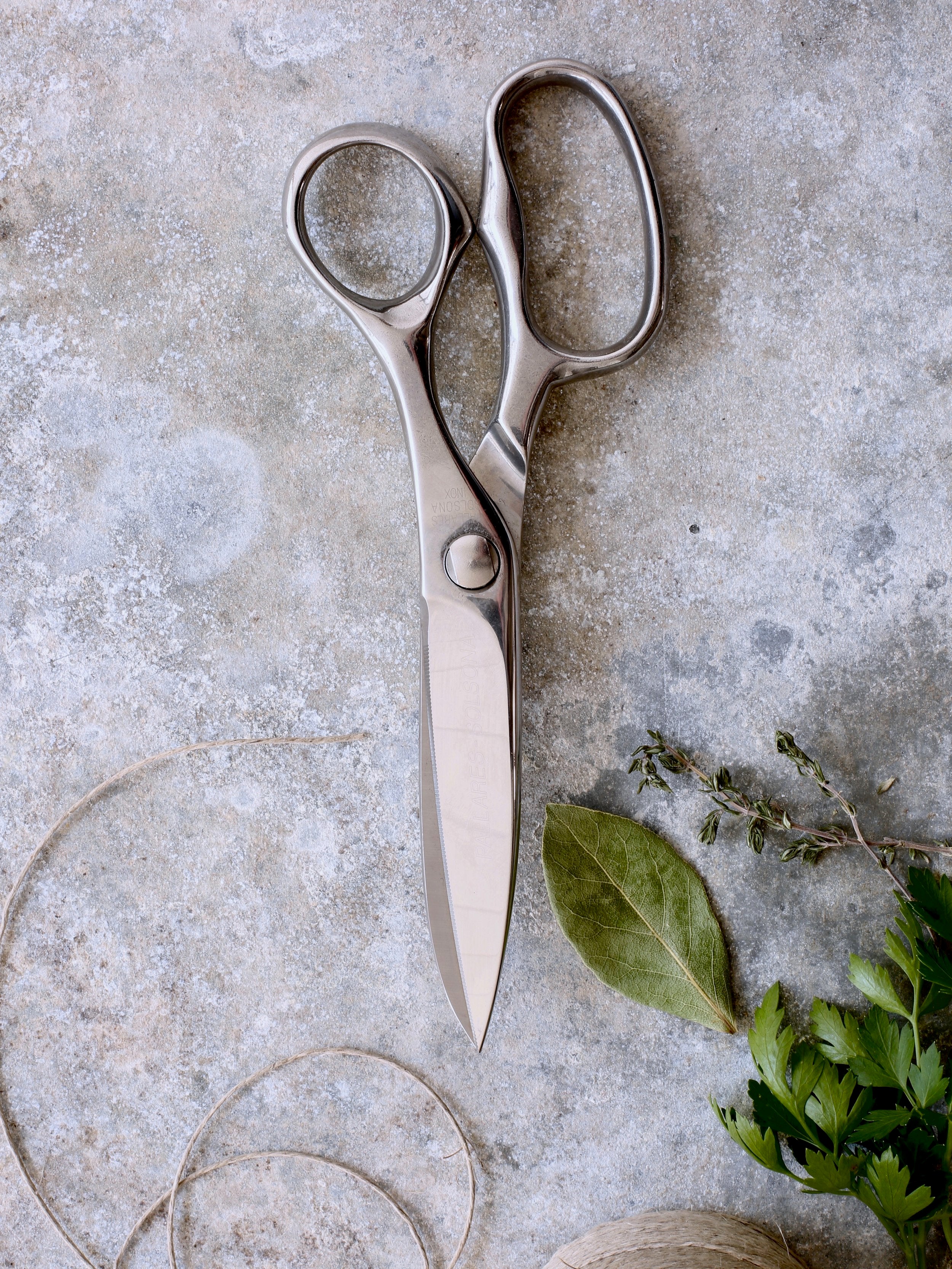
To cut the chicken into 10 pieces: Place the bird on a clean wooden cutting board with the legs closest to you. First, remove any large knobs of fat. Hold the bird by one whole leg and carefully cut through the skin between the breast and the thigh, then cut between the breast meat and thigh meat until you reach bone, taking care not to cut into the flesh on either side. Next, cut around the base of the leg to separate it from the rest of the bird, in a circle perpendicular to the cutting board, gently pushing the leg to the side so you can easily find the joint. Use your hand to push the leg away from the body of the bird until the hip joint pops. Cut through the joint between the two bones to remove the leg (both leg and thigh portions). Repeat the process on the other side. Separate the thighs from the legs, carefully cutting first through the skin, then the joints. As you are cutting, take care not to rip the skin. The goal is to create neat pieces of meat with the skin still intact. As you work, smooth the skin out over each cut piece so it covers as much flesh as possible. Next, cut off the wings at the base joint in the same way, keeping all three segments of each wing intact. (Sometimes, we lift the bird up slightly before cutting because this can make it easier to find the joint between the wing and the breast.) Using sharp kitchen shears, remove the entire breast (two halves) from the rest of the chicken by cutting along the seam where the breast meat ends on each side, cutting right across the ribs. Once the breasts are removed, cut down the center breast bone to separate the breast into two pieces, then cut each resulting part in half, so there are four pieces of breast meat. You should have 10 pieces of chicken: 4 bone-in breast pieces, 2 thighs, 2 wings, and 2 legs.
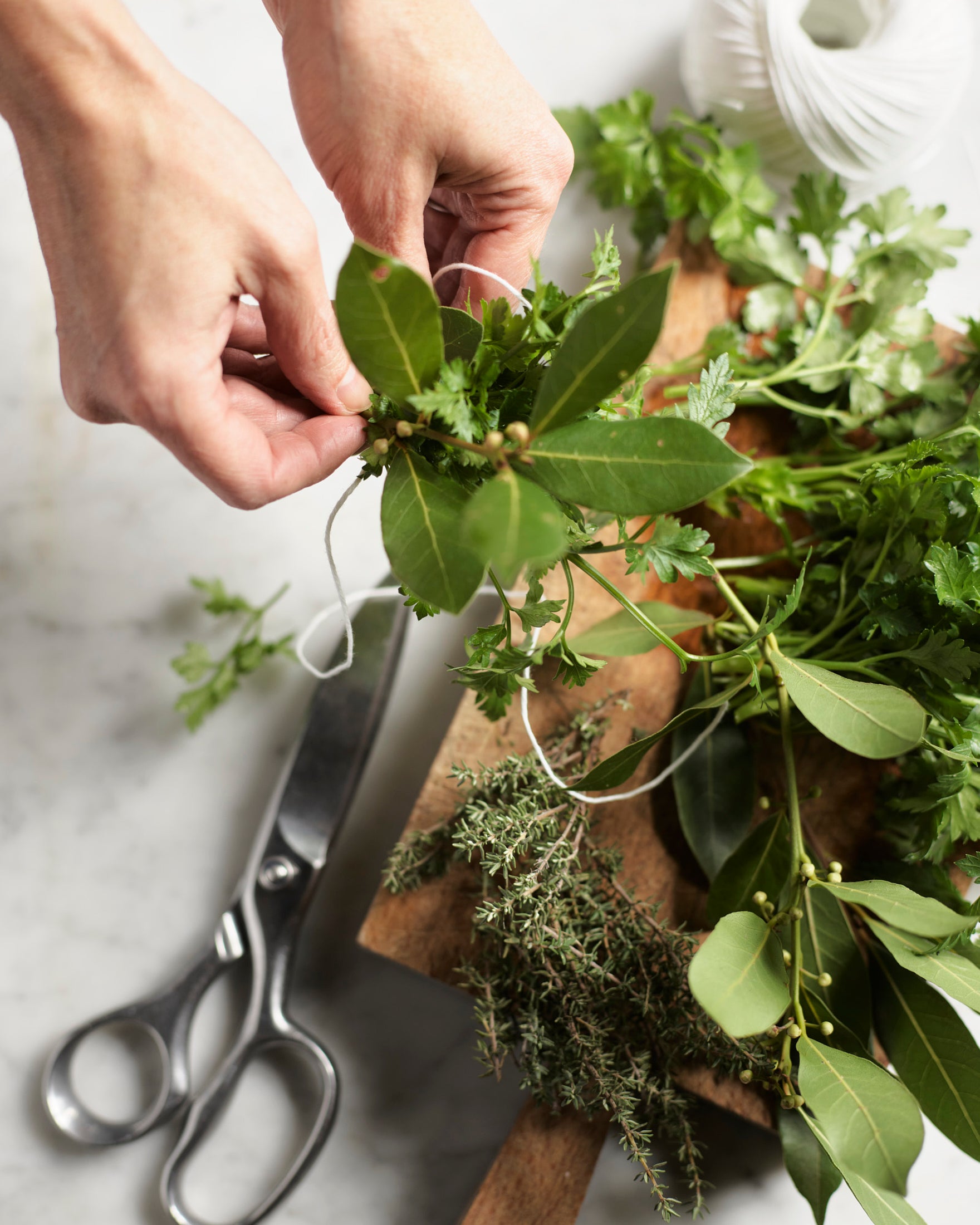
A bouquet garni is a traditional French way to flavor liquids, and is often used in braises like this one. To make one, gather a few sprigs of thyme, a bay leaf, and a few sprigs of parsley, and tie them together with kitchen string.
Notes
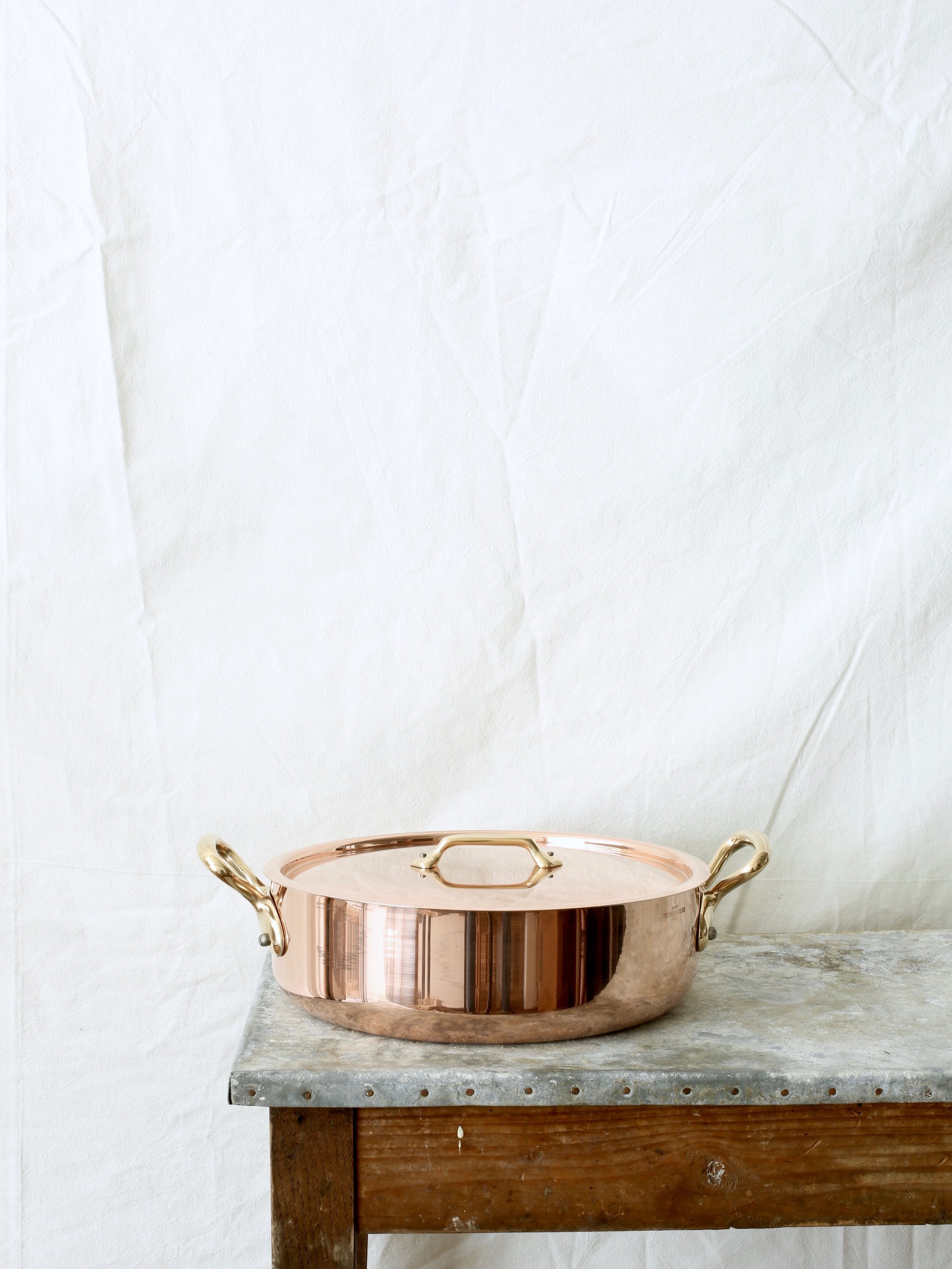
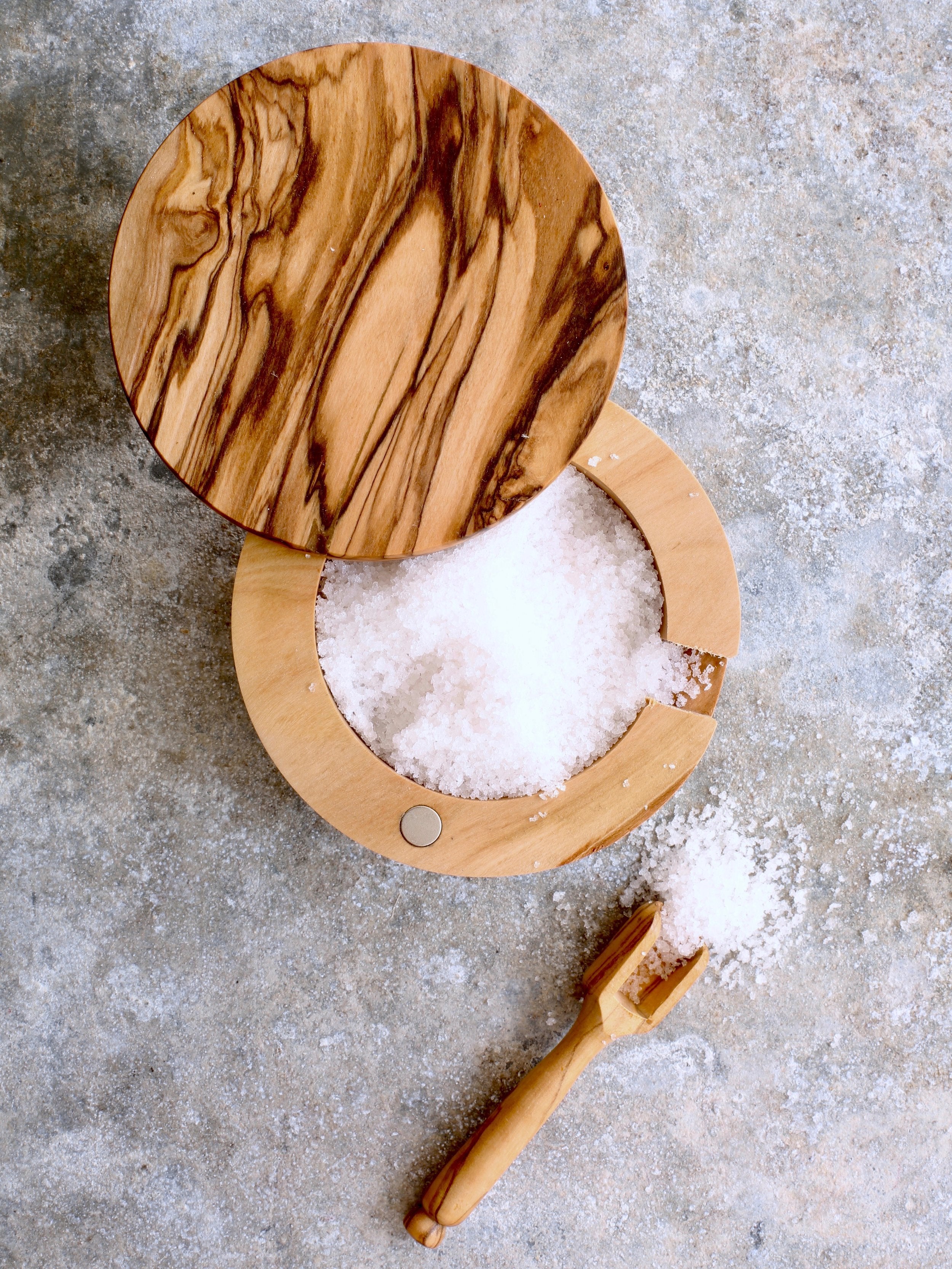
Equipment